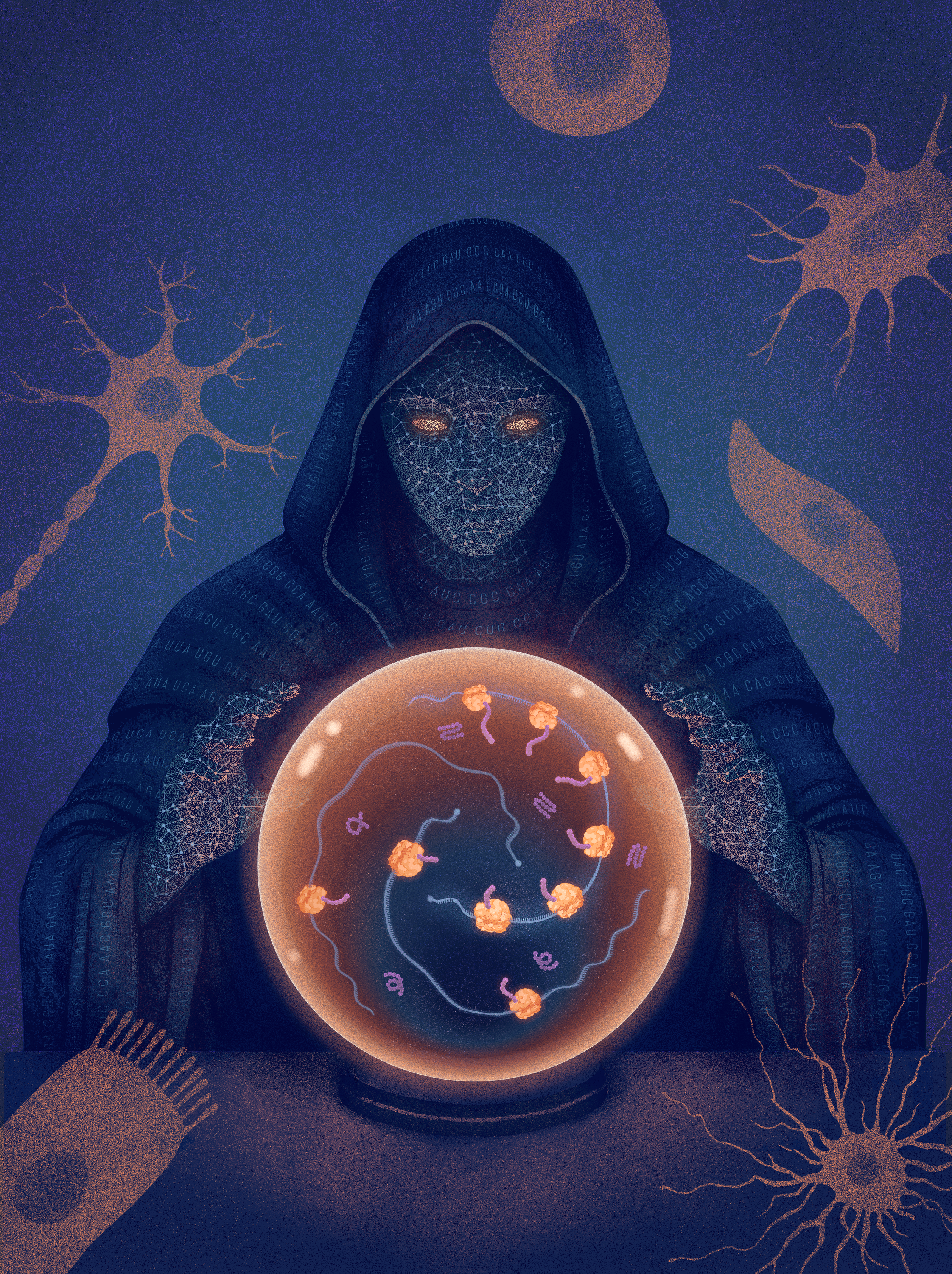
We are thrilled to share two companion papers published back-to-back in Nature Biotechnology. Both studies were built on a unified compendium of >3500 ribosome profiling datasets spanning more than 140 human and mouse cell lines and tissues.
In the first paper, led by Yue Liu, we introduce the concept of Translation Efficiency Covariation (TEC). By systematically quantifying coordinated translational programs across cell types, we found that TEC is conserved between human and mouse, uncovers gene functions not evident from RNA or protein co-expression, and that physically interacting proteins are highly enriched for positive translational covariation. These findings establish TEC as a conserved organizing principle of mammalian transcriptomes. You can read the TEC paper here.
In the second paper, a wonderful collaboration with the Sanofi mRNA Center of Excellence led by Dinghai Zheng, Logan Persyn, and Jun Wang we developed RiboNN, a multitask deep convolutional neural network that predicts translation efficiency directly from full-length mRNA sequence across hundreds of cell types. RiboNN achieves state-of-the-art performance and quantifies the relative per-nucleotide contributions of the 5' UTR, CDS, and 3' UTR (~67%, 31%, and 2%, respectively). The model captures mechanistic principles such as ribosomal processivity and tRNA-driven codon optimality, predicts the translational behavior of base-modified therapeutic mRNA, and explains evolutionary selection pressures in human 5' UTRs. You can read the RiboNN paper here.